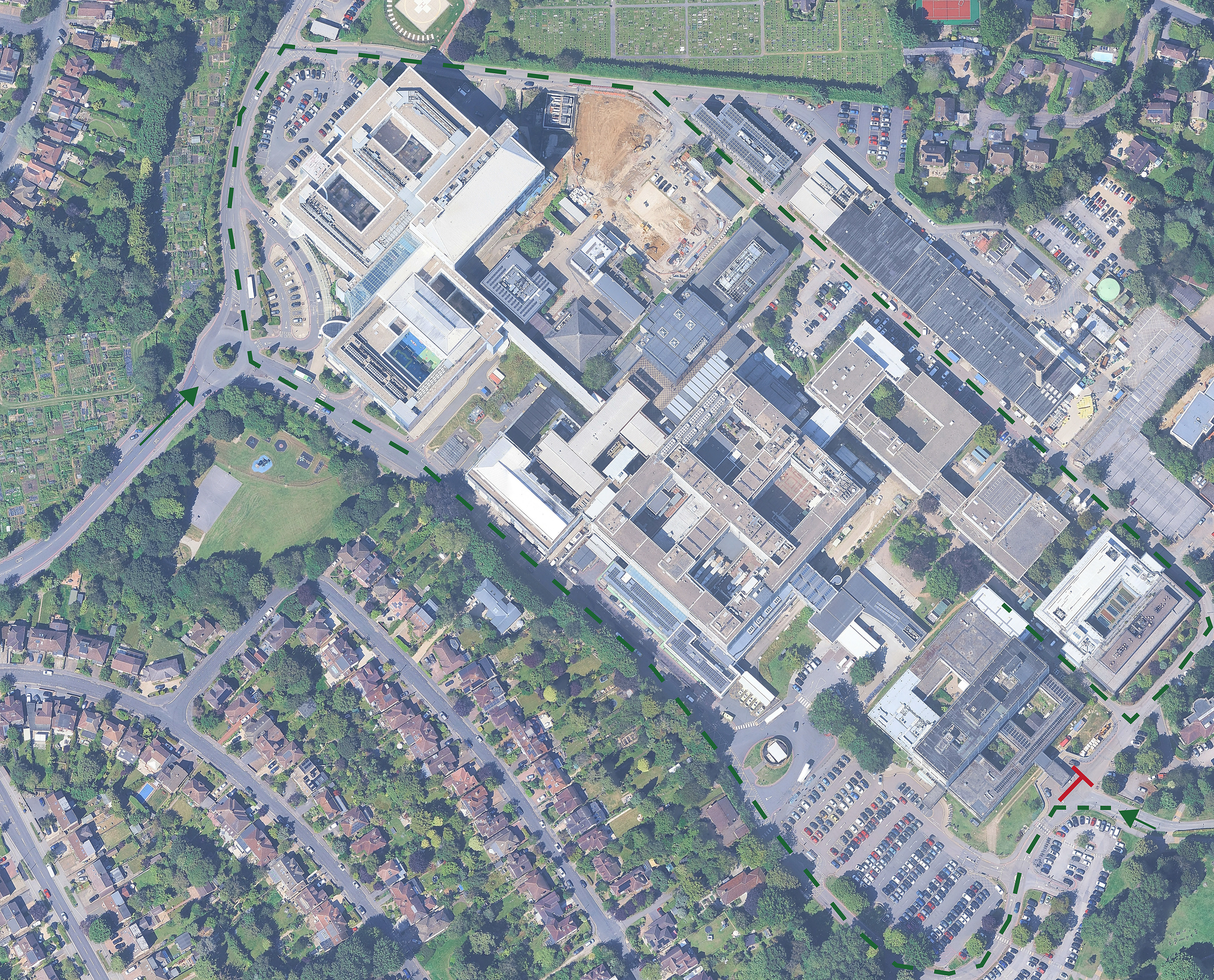
Sequence of Impact
How the crane's footprint and site access change in sequence — from maximum impact at rig/de-rig, through the standing condition, to the resulting access arrangements.
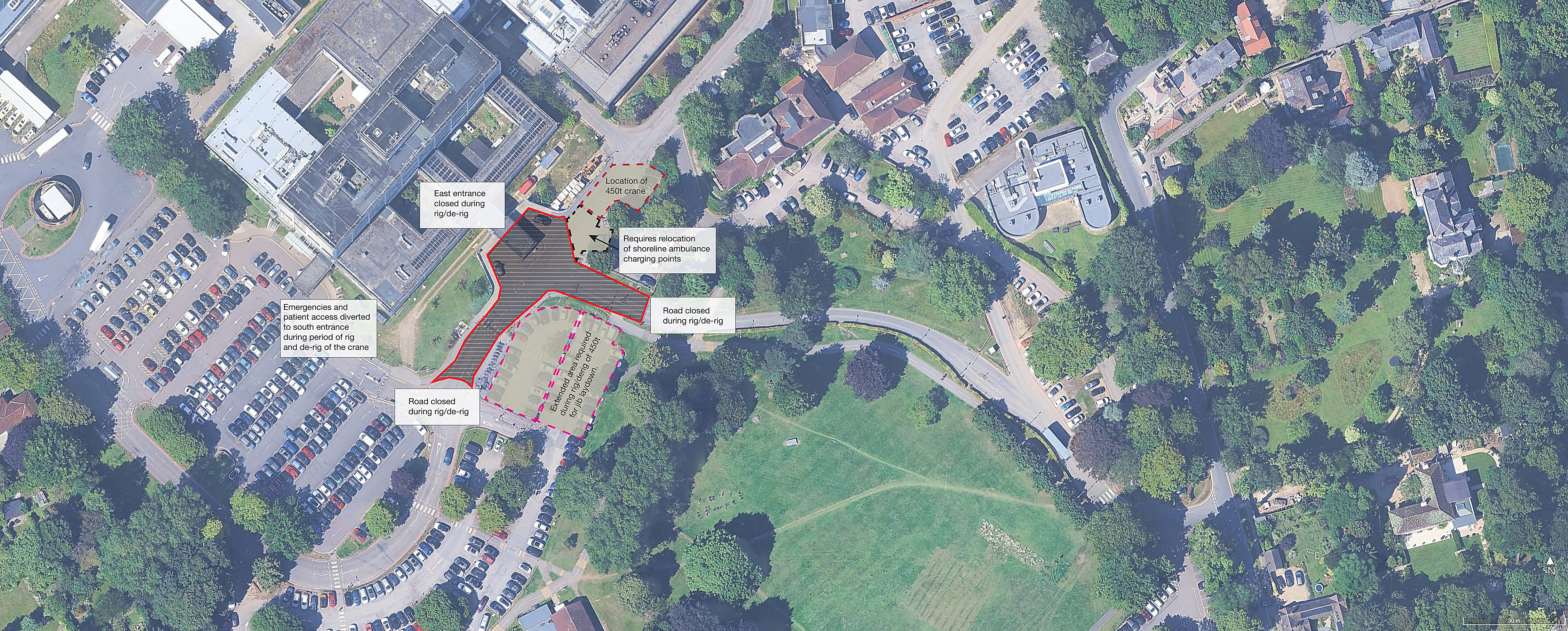
Maximum temporary footprint
During the overnight rig and de-rig windows, the working area extends to allow the crane to be positioned so it can build the jib of the 450t crane, together with the east entrance closure and diversion of emergency and patient access to the south entrance — the largest temporary footprint and access impact required at any point in the works. This extended footprint accounts for c.19 additional car parking spaces lost during the window.
Standing footprint, between rig and de-rig
Once erected, the crane's footprint reduces to its standing extent. The tower is oversailed with load specifically when the plant on the north-west roof is being put into place, and there is no through access across the closed section while the crane remains erected.
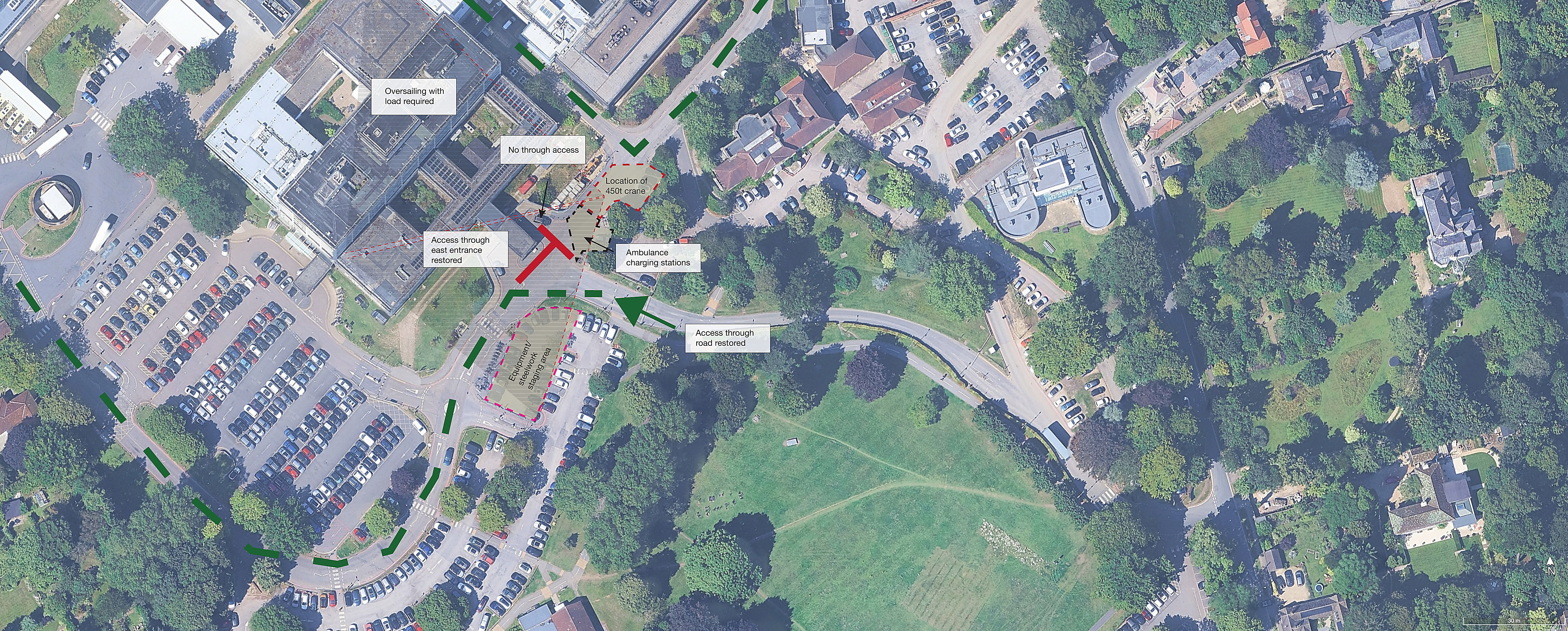
Circulation restored, blocked only at the crane position
While the crane remains erected between rig and de-rig, access through the east entrance and the affected road is restored, and the ambulance charging stations stay in their relocated position — with a blockage remaining at the crane's own footprint. Once the crane leaves the site, that blockage clears and the shoreline ambulance charging points are relocated back to their original position.